Farrukh Moin Ahmed

Industries / Ecommerce / Meta Ads

Meta Ads Expert for Ecommerce

Meta Ads for ecommerce brands that need sales, not reach.

Facebook and Instagram advertising built around purchases and cost per purchase: campaign structure, audiences, creative testing and tracking that matches your store. As a Facebook Ads specialist, I also run Meta Ads for Shopify brands.

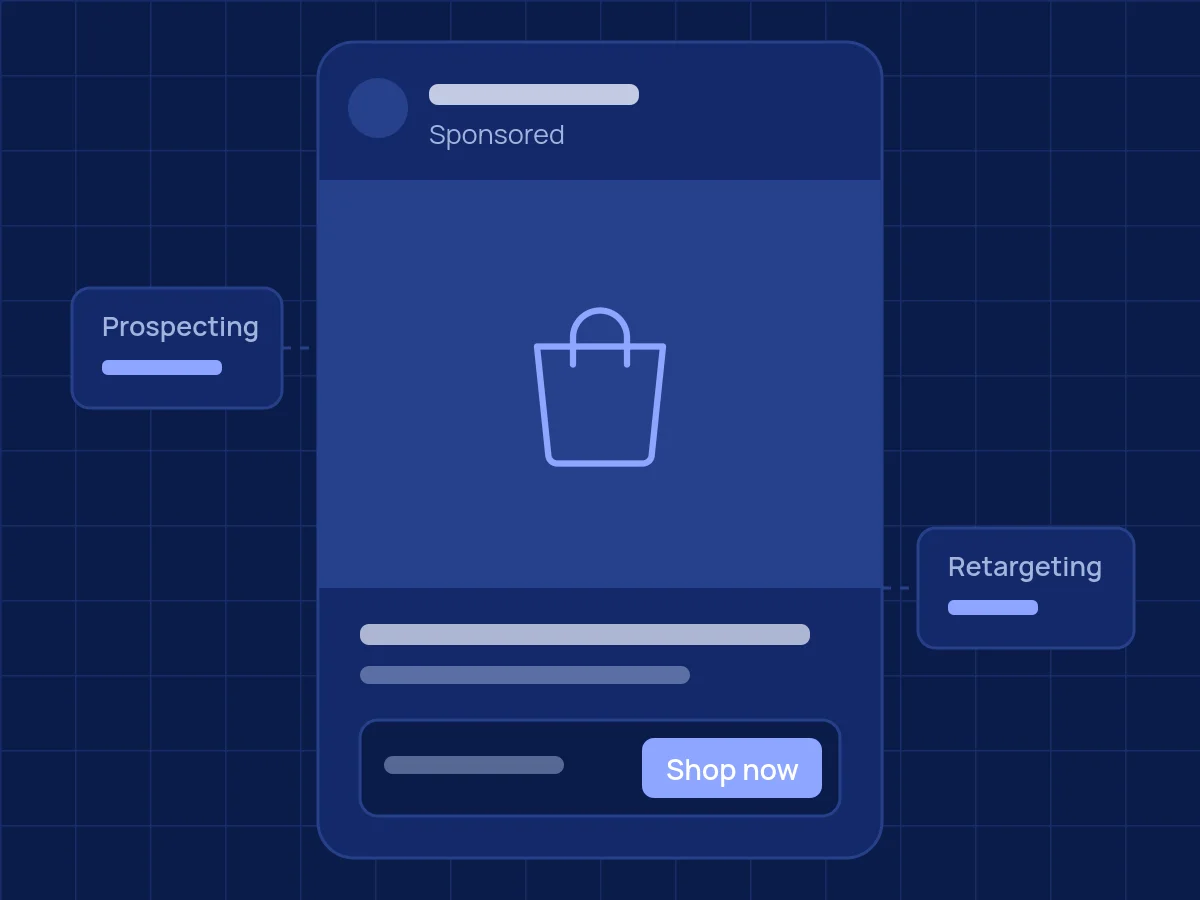
Meta Ads illustration

How should an ecommerce brand structure Meta Ads?

For most small and mid-sized budgets, start with one purchase-optimized campaign that covers every funnel stage, so Meta has enough purchases to learn from. Split prospecting and retargeting into separate campaigns only when each can reach about 50 purchases a week on its own. That change cut Woda Bags’ cost per purchase from $49.07 to $25.69.

Updated October 2026 · By Farrukh Moin Ahmed, digital marketing expert

Woda Bags on Meta, since late April 2026

A US bag brand. I took over its Meta Ads in late April 2026 and replaced the account’s separate campaigns with one purchase-focused, all-funnel campaign.

$10,550

Purchase value

41

Purchases

10.01

ROAS on $1,053 spend

$25.69

Cost per purchase

Meta-reported figures, 7-day click / 1-day view attribution, as of October 2026. The campaign runs on a $9 daily budget.

Fewer campaigns, cheaper purchases.

Before I took over, the account ran three campaigns for different parts of the funnel: one for prospecting traffic, one for retargeting, and one combining both. Each had its own budget and its own data, and the retargeting-only campaign was the most expensive way to get a sale, at $87.87 per purchase.

I replaced them with one campaign that targets every funnel stage and optimizes for purchases. Meta gets every conversion signal in one place, and the budget moves to whichever audience is converting that week.

“Before” covers the account’s two earlier purchase campaigns: $7,360 spend, 150 purchases, $31,906 purchase value. Budgets and run dates differ, so read this as a direction rather than a controlled test.

Earlier purchase campaigns vs my all-funnel campaign

ROAS

+131% higher is better

Before: 4.34
After: 10.01

Cost per purchase

−48% lower is better

Before: $49.07
After: $25.69

Meta campaign setups for online stores

Which structure fits depends mostly on how many purchases your budget can buy each week.

SetupWhen it fitsMain risk
One all-funnel purchase campaignSmall and mid-sized budgets that can’t feed several campaigns with purchase dataLess control over how much goes to new vs returning visitors
Separate prospecting and retargetingLarger budgets where each campaign can reach about 50 purchases a weekEach campaign learns slowly if budget is split too thin
Advantage+ sales campaignsCatalogs and creative libraries large enough for Meta’s automation to test widelyLess visibility into which audiences drive sales
Traffic or landing page view campaignsRarely for sales. Useful for building audiences or testing landing pagesCheap clicks from people unlikely to buy, as Woda’s earlier traffic campaign showed

Sound familiar?

The Meta Ads problems online stores bring to me most often, and what I do about each one.

The problem

“We get clicks and engagement, but not sales.”

Traffic and engagement objectives find people who click, not people who buy.

How I fix it

Optimize for purchases

A sales objective optimized for purchases. Woda Bags’ old traffic campaign bought 16,262 link clicks and no attributed purchases.

The problem

“Our budget is split across several campaigns, and none of them learn.”

Each campaign gets only a slice of the purchases Meta needs to learn, and overlapping audiences bid against each other.

How I fix it

Consolidate until volume allows separation

One all-funnel purchase campaign on smaller budgets. Woda Bags’ cost per purchase fell from $49.07 to $25.69 after consolidating three campaigns into one.

The problem

“Retargeting gets all the credit, so we keep moving budget to it.”

Retargeted people are already warm, and many would buy anyway. Cut prospecting and the retargeting pool dries up a few weeks later.

How I fix it

Judge each stage on its own job

Prospecting judged on new customers, retargeting on cost per purchase and frequency, and everything against store revenue.

The problem

“Meta's purchase numbers don't match our store.”

The Pixel alone misses purchases blocked by browsers, while view-through attribution over-credits others.

How I fix it

Pixel plus Conversions API

Server-side events alongside the Pixel, purchase values checked against orders, and store-level reporting.

The problem

“Our ads stop working after a couple of weeks.”

Without a creative testing plan, the same ads wear out and costs creep up.

How I fix it

Run a creative system

Briefs by shopper question, a few live ads at a time, and the weakest replaced as new ones arrive.

Meta Ads for fashion and accessories brands

Fashion sells on looks, which makes Facebook and Instagram a natural fit, as long as campaigns are built for purchases and creative keeps coming. See how I structure Meta Ads for fashion and accessories brands, with Woda Bags’ numbers.

More business types will be added as I publish results from other accounts.

10.01

Woda Bags Meta ROAS since late April 2026

$25.69

Cost per purchase, down from $49.07

How I run Meta Ads for online stores

The same approach behind the Woda Bags campaign, applied to your catalog, margins and budget.

01

Structure for your budget

One consolidated campaign when spend is small, so Meta has enough purchases to learn from. Separate stages only once each can stand on its own data.

02

Track purchases properly

Meta Pixel plus Conversions API, with purchase values checked against your store orders.

03

Test creative deliberately

One variable at a time (hook, format, offer, product) so each test teaches something reusable.

04

Judge each audience by its job

New-customer purchases for prospecting, frequency and cost per purchase for retargeting, blended return for the account.

05

Plan it alongside Google

Meta creates demand and Google captures it. Budgets are set together so you don’t pay twice for the same customer.

How I test creative for ecommerce

Creative is the biggest lever in Meta Ads. Tests change one thing at a time, so every result teaches something.

Hook

The first second of a video or the headline of an image. It decides whether anyone stops scrolling.

Format

Static image, short video, carousel or catalog ad. The same message can perform very differently by format.

Product

Which product leads. Best sellers aren’t always the best entry point for new customers.

Offer

Free shipping, bundles or a discount. Tested deliberately, so customers aren’t trained to wait for a code.

Proof

Reviews, numbers or the product in use. Proof often matters more than polish.

Audience fit

Who the creative speaks to. Different angles for different buyers, inside the same campaign.

Who this is for

An honest filter, so we both save time.

A good fit if

Probably not a fit if

What I report on

Numbers that connect ad spend to money in the bank, not just platform dashboards.

Purchases and cost per purchase

The primary goal, held against the cost per purchase your margins can afford.

Purchase value and ROAS

Meta-reported, with the attribution setting stated every time.

New vs returning buyers

So retargeting doesn’t take credit for customers you already had.

Frequency

How often the same people see your ads. Rising frequency signals creative fatigue.

Creative performance

Hook rate and cost per purchase by ad, so winning angles are found and scaled.

Store revenue reconciliation

Meta-reported purchases compared with your store’s actual orders.

Meta creates demand. Google captures it.

In an ecommerce account the two channels do different jobs. Meta reaches people who aren’t searching yet, through creative in their feeds. Google Shopping and Search reach people who are already looking for what you sell. I plan them together and report them separately, because both platforms can claim the same order.

Woda Bags runs both. Its Google Ads results are on the case study.

Woda Bags on Google Ads

8.12

ROAS

395

Orders

$76,211

Conversion value

Questions about Meta Ads for ecommerce

It depends on your margins more than any benchmark. Your breakeven ROAS is 1 divided by your gross margin: at a 40% margin you need a 2.5 ROAS just to cover product costs. I set targets from that number, not from industry averages.

Only when the budget can support both. Meta’s learning phase needs about 50 optimization events in seven days. On a small budget, one combined campaign usually performs better, as the Woda Bags account showed.

It’s Meta’s automated sales campaign, which replaced Advantage+ shopping campaigns in 2025. It lets Meta test audiences and placements widely. It works best with a large enough catalog and creative library for the automation to learn from.

Only when there are too few purchases for Meta to learn from. Add-to-cart optimization gets more data, but it can find people who add items and never buy. Purchases are the better goal whenever volume allows.

Enough to test real differences, not so many that each ad gets too little spend to judge. A few distinct concepts, each with a couple of variations, is usually better than dozens of near-identical ads.

For most stores, yes. Browser tracking misses purchases because of ad blockers and privacy settings. The Conversions API sends purchase events from your server, and Meta processes them like Pixel events, so it sees more of your real sales.

Each platform reports its own results, and both can claim the same order. I compare them against your store’s actual revenue so budget decisions are based on what really sold.

Access to Business Manager and the ad account, your Pixel and Conversions API setup, and your store or GA4 sales data. Read access is enough for an audit.

Meta Ads guides for online stores

Long-form articles on campaign structure, budgets and creative.

Meta Ads article cover illustration

Meta Ads campaign structure: one campaign or three? What Woda Bags’ account showed

Woda Bags ran three Meta campaigns for different funnel stages. Consolidating them into one all-funnel campaign cut cost per...

Read article
Ecommerce article cover illustration

Google Ads vs Meta Ads for ecommerce: which should you run first?

Google Ads vs Meta Ads for ecommerce, compared: what each channel does, which to start with, how to split...

Read article
Meta Prospecting Retargeting Budget illustration

Prospecting vs retargeting: how to split your Meta Ads budget

How to split Meta Ads budget between prospecting and retargeting: when to combine them, how to size each stage,...

Read article

Get a second opinion on your Meta Ads

Tell me what you sell, how your campaigns are set up and what you’re spending. I’ll reply with an honest view of what I’d change.

What happens next

What do you need help with?
Scroll to Top